
Week #4: When “Letting It Pass” Becomes the Problem 🔄

After listening to educators in previous weeks, we finally sat with middle school students themselves to see how social challenges appear in their everyday lives.
Listening to Teens 🎙️
When we asked teens to introduce themselves, most stopped at the basics.Name, age, class.
“I am R, thirteen, eighth grade.” (8th grade student)
When we asked about conflicts, many described letting things fade instead of talking about them.
“Most of the time it is small things, so we let it go.” (8th grade student)
Some mentioned not speaking for weeks or months and then slowly reconnecting, while phones and online spaces remained at the center of their social world. Together, these stories suggest that many teens have few opportunities to practice deep, face to face communication and conflict resolution.
From Insights to a Clear Problem 🎯
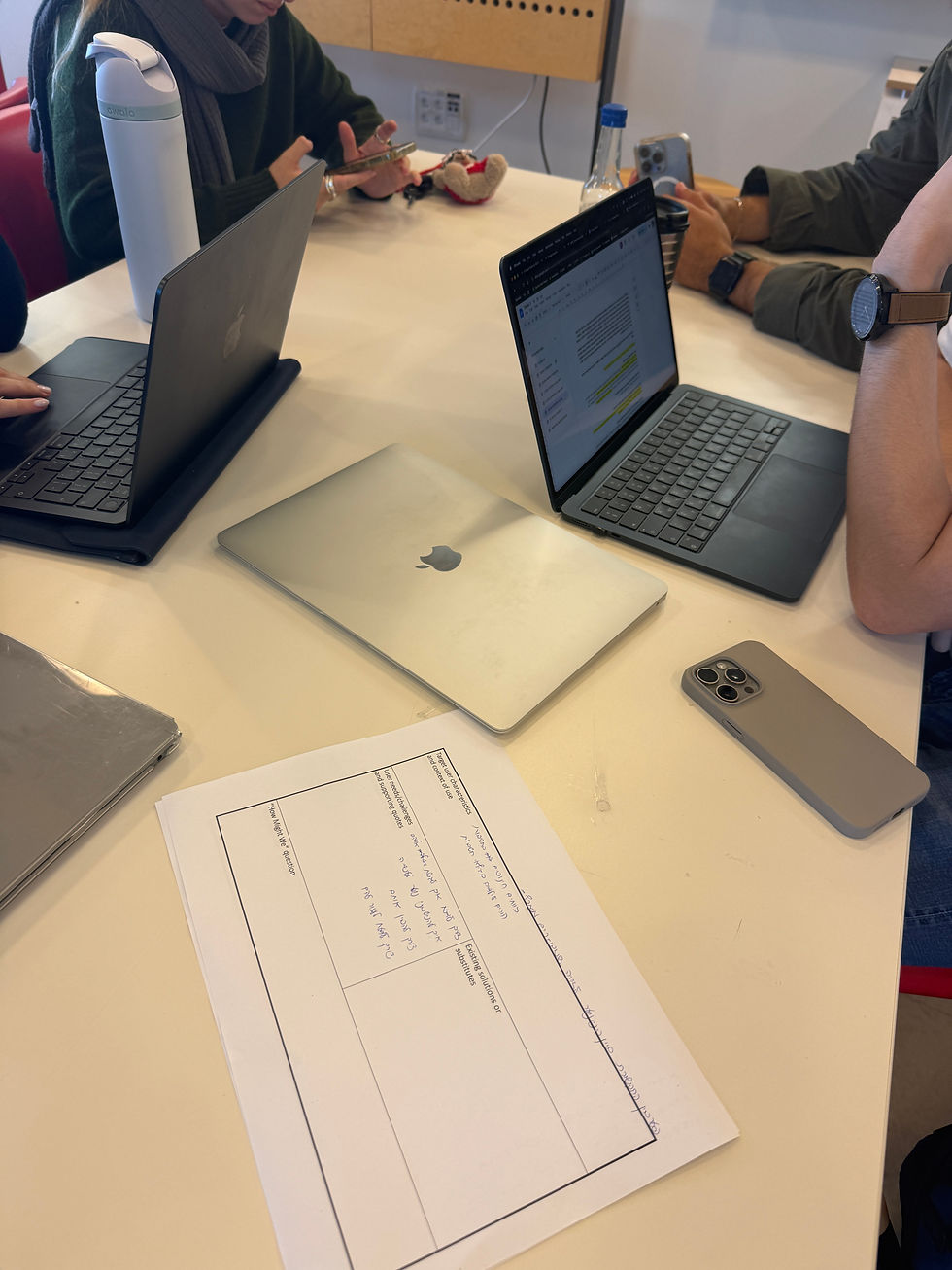
After organizing what we heard from teens and experts, three main challenges stood out.
A communication gap between adults and teens,
The way teens communicate today does not help them develop meaningful social skills.
Not enough practical tools to resolve conflicts in a healthy, constructive way.
Because the last two are tightly connected, we merged them into one focus. Our project now centers on helping teens develop social skills with an emphasis on conflict resolution in digital communication environments.
Context, Experts and Research 📚
Our primary audience is teens aged twelve to sixteen, and our secondary audience is homeroom teachers, counselors and school staff.
Earlier interviews with educators reflected the same patterns.
“They do not look each other in the eyes. They do not know how to sit and talk face to face.” (Educational counselor)
To support our fieldwork, we also reviewed research on teens, conflict and digital communication, which describes avoidant or destructive conflict strategies and the impact of intensive screen use on social skills and offline friendships. These findings reinforce what we saw in the field.
Needs and How Might We 💡
From teens and educators, a shared picture emerged. Teens need help putting into words what happened and how they feel, simple and respectful ways to repair relationships and support in addressing conflicts before distance and silence take over. Educators need earlier signals and clearer ways to guide these conversations. These insights led us to guiding questions such as:
How might we help teens express what happened and what they feel in a clearer and more constructive way
How might we give them accessible ways to deal with conflicts instead of simply letting them fade
How might we support teachers in recognizing these moments and helping students talk them through
Existing Solutions 🔎
There are already school based programs such as peer mediation, social emotional learning curricula and anti bullying frameworks, as well as digital tools like Social Quest and Skillsta that help teens practice social situations.

Looking Ahead 🚀
By the end of this week, we moved from a broad topic to a focused challenge with a defined audience, clear needs and support from experts and research. Next, we will begin exploring directions for solutions and shaping our first ideas.
Stay tuned. ✨🔍


Comments