
Semester #2 Week #2 – From Ideas to Experiments 🔬

Updated: Jun 6
After redefining our direction in week 1, this week marked a clear shift:
We moved from exploring ideas to actually testing them.
Instead of asking “what could work?”, we started asking:
👉 What actually works for users?
🔬 Testing the Core Question - Does Vibration Help?
One of our main focuses this week was understanding the role of vibration in the experience.
We asked:
Does vibration help users focus on their breathing?
Does it reduce stress?
Does it improve synchronization during breathing exercises?
To answer this, we designed and ran a user experiment combining vibration and a physical object.
Users interacted with a breathing pattern supported by vibration, and we measured:
Stress levels
Physical arousal
Overall experience
The results were encouraging:
Users reported reduced stress levels
Many felt they could focus better without thinking about timing
Most said they would use the technique again
This was our first real validation that the concept has potential.
📳 Refining the Interaction - Finding the Right Rhythm
Beyond “if vibration works”, we also explored how it should work.

We tested different vibration patterns:
Single pulse per phase
Strong vs. continuous vibration
Variations in intensity and timing
One key insight:
There is no single “perfect” pattern - users had different preferences, especially regarding intensity.
This highlighted the need for adaptability and personalization in future iterations.
🍩 Design Exploration - Turning Objects into Experiences
At the same time, we continued exploring the physical form of the product.

We tested different shapes inspired by everyday objects and trends:
Croissant, Pretzel, Banana, Strawberry, Hamburger, Avocado
The goal wasn’t just aesthetics, it was:
Comfort in hand
Interaction possibilities
Suitability as a bag charm
We also started testing different sizes and proportions, realizing that even small changes significantly impact usability.
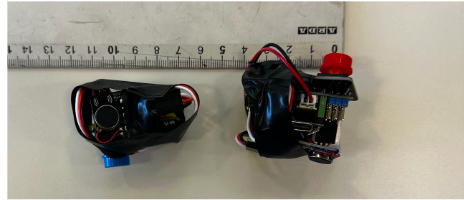
🛠️ Building Our First Hardware Prototype
This week, we also made our first real progress on the technological side.
We moved toward building an initial hardware prototype, including:
Controller
Vibration motors
Basic interaction logic
This step was critical - it connected everything:
👉 design, interaction, and technology into one working system.
🧠 From Assumptions to Insights
Another major shift this week was in how we approached the project. Instead of relying on assumptions, we-
Defined research questions
Built experiment protocols
Collected real user feedback
Extracted actionable insights
This made the project feel much more grounded and data-driven.
💡 Key Takeaways
This week was a turning point, We learned that:
Testing early changes the direction faster than thinking
Small interaction details (like vibration timing) matter a lot
Physical design and interaction must evolve together
Users don’t always behave as expected, and that’s where the real learning happens
🔜 What’s Next?
Moving forward, we will continue refining all three main axes:
Interaction - improving the breathing guidance and vibration logic
Design - iterating on shapes, sizes, and usability
Technology - stabilizing and improving the hardware prototype
Our goal is to move toward a more integrated and consistent user experience.


Comments